
Puedes cambiar la voz (gratis). Primero lee el título y luego la noticia.
Iowa’s cornfields are yielding to a harvest that feels increasingly desperate, as rising fuel, fertilizer, insurance and machinery costs push farmers toward political frustration ahead of midterm elections less than three weeks away. The agricultural state has become a crucial front in Democrats’ effort to retake the Senate.
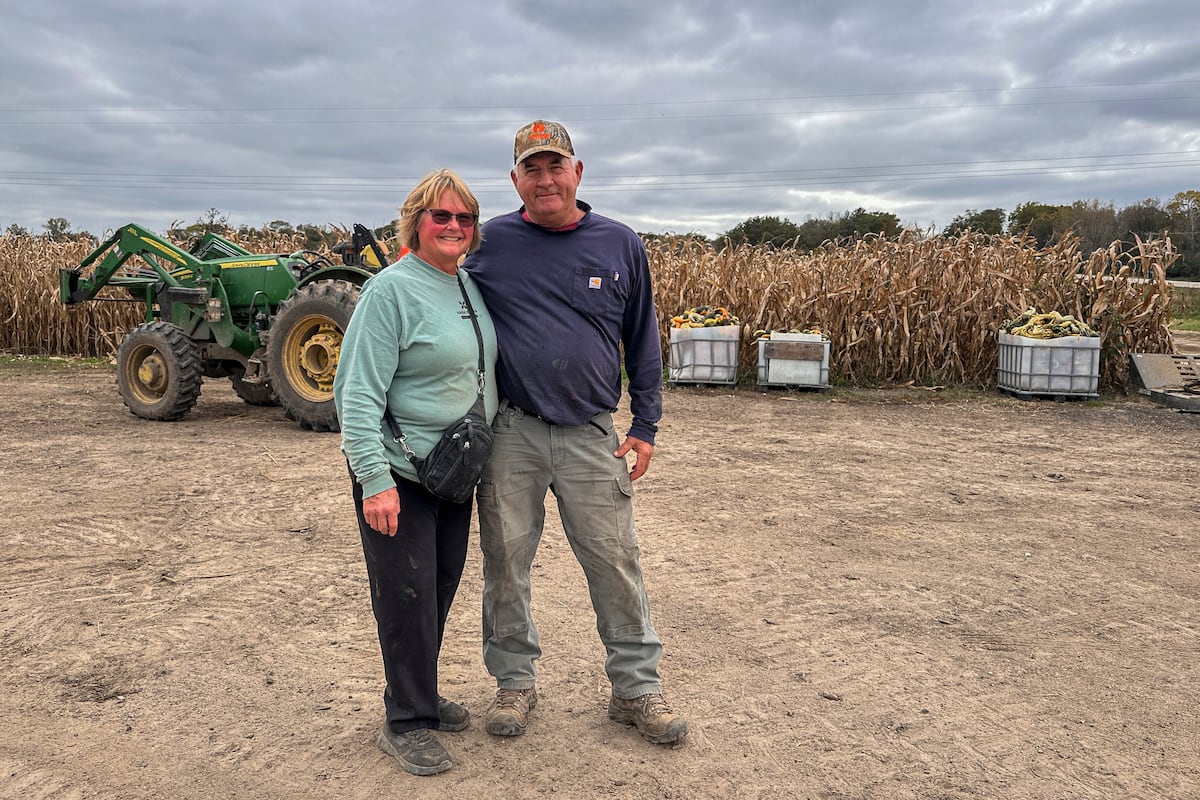
Chip Hoffman, a 66-year-old third-generation farmer near Cedar Rapids, has gathered nearly his entire crop before rains could ruin the season. He blames Trump’s tariffs and the war against Iran for the surge in inflation that has squeezed profit margins across Iowa’s family farms. Conversations among farmers in the Corn State pay little attention to Donald Trump’s excesses or the excitement around the midterms, despite Iowa’s status as one of the key battlegrounds in Democrats’ drive to regain control of the U.S. Senate.
A recession driven by trade policy and geopolitics
Ryan Marquart, a 44-year-old fourth-generation farmer based near Van Meter, explains that tariffs and trade swings make multi-year planning far harder. “When you farm, you plan over several years,” he says. “You market last year’s crop, work with this season’s production and decide what you’ll do next year while starting to sell the following year’s harvest.” Matt Russell, who splits his time between his farm and leading Iowa’s farmers’ union, describes agriculture as being “in one of the worst recessions in decades” and warns that political decisions have turned an otherwise difficult cycle into something “very serious.”
Russell notes that under the Biden administration high input costs were offset by stronger margins, allowing room to plan. With the Trump administration, that buffer has disappeared. He also points to polling evidence that more and more Iowans are interested in achieving change: “We’re seeing evidence in Iowa that more and more people are interested in achieving it.” Jamie Kuiper, 64 and retired, puts it plainly: “I’d like to see some political change. Change isn’t a bad thing. The problem is that when the same people stay in office a long time, things simply don’t get done as they should.”
The rural vote as a political force
Russell explains why farmers carry outsized influence in the state: “When a farmer talks about what he’s doing with his vote or explains his analysis of the policy implications, other Iowans pay attention. So you know it’s not just the farmers’ vote; it’s Iowa’s rural vote.” According to data from the National Conference of State Legislatures (NCSL), nearly 37% of Iowa’s population lives in rural areas, while 64% of registered voters live in rural communities. Josh Turek, the Democrats’ Senate candidate, is the party’s pick to deliver the kind of change Kuiper describes, though his lead over Republican challenger Ashley Hinson has narrowed in recent weeks.
Farmers like Hoffman and Marquart represent a constituency that is traditionally conservative but now questioning whether the political status quo can address their economic reality. Their frustration cuts across party lines: they blame tariffs, trade policy and geopolitical instability rather than any single candidate. As Russell asks: “Will that affect the rural vote? I don’t think we know yet, but clearly a movement is underway. Polls are showing a shift toward the Democrats; that’s evidence. But will it be enough to change the election outcome? We’ll know in November.”
Implications for the midterm elections and beyond
The outcome of the Iowa Senate race will matter well beyond the Corn State. A Democratic gain would signal momentum for the national midterm wave, while a Republican retention would blunt the Democrats’ effort to retake the Senate. For farmers like Hoffman, whose wife arranges pumpkins for Halloween on the narrow road outside their farmhouse, the question is practical as much as political: can elected officials deliver the structural change needed to bring fuel, fertilizer and insurance costs back down?
With harvest season still underway and the election less than three weeks away, Iowa’s rural voters remain the test case for whether economic anxiety can translate into political movement. As Russell summarizes the stakes: “It’s a tremendous moment for Americans to decide in these elections whether to continue on the current path or make a change.” Whether that change arrives will depend partly on whether the rural vote — long a conservative stronghold — follows the current trajectory toward the Democrats.